The Guerrilla Campaign That Turned Meta's Own Ads Into a Warning
A famous face, a fashionable frame, and a product that never asks. The public has stopped agreeing to be the input.
Originally published in The Fault Line

On a wall in Washington, D.C., Meta’s sleek Kylie Jenner campaign has been turned inside out in a piece of guerrilla advertising with the same glossy portraits, the same Ray-Ban and Meta logos, the same font. But with an added slogan that reads “Mass Surveillance Predator Glasses” or “Designed for Secret Surveillance.”
One poster mimics the product’s AI voice prompt: “Hey Meta, what’s her full name and address?” The parody is so close to the original that you could miss it if you didn’t know the original before. The guerrilla parody barely had to change anything, because the threat was already present in the original advertisement.
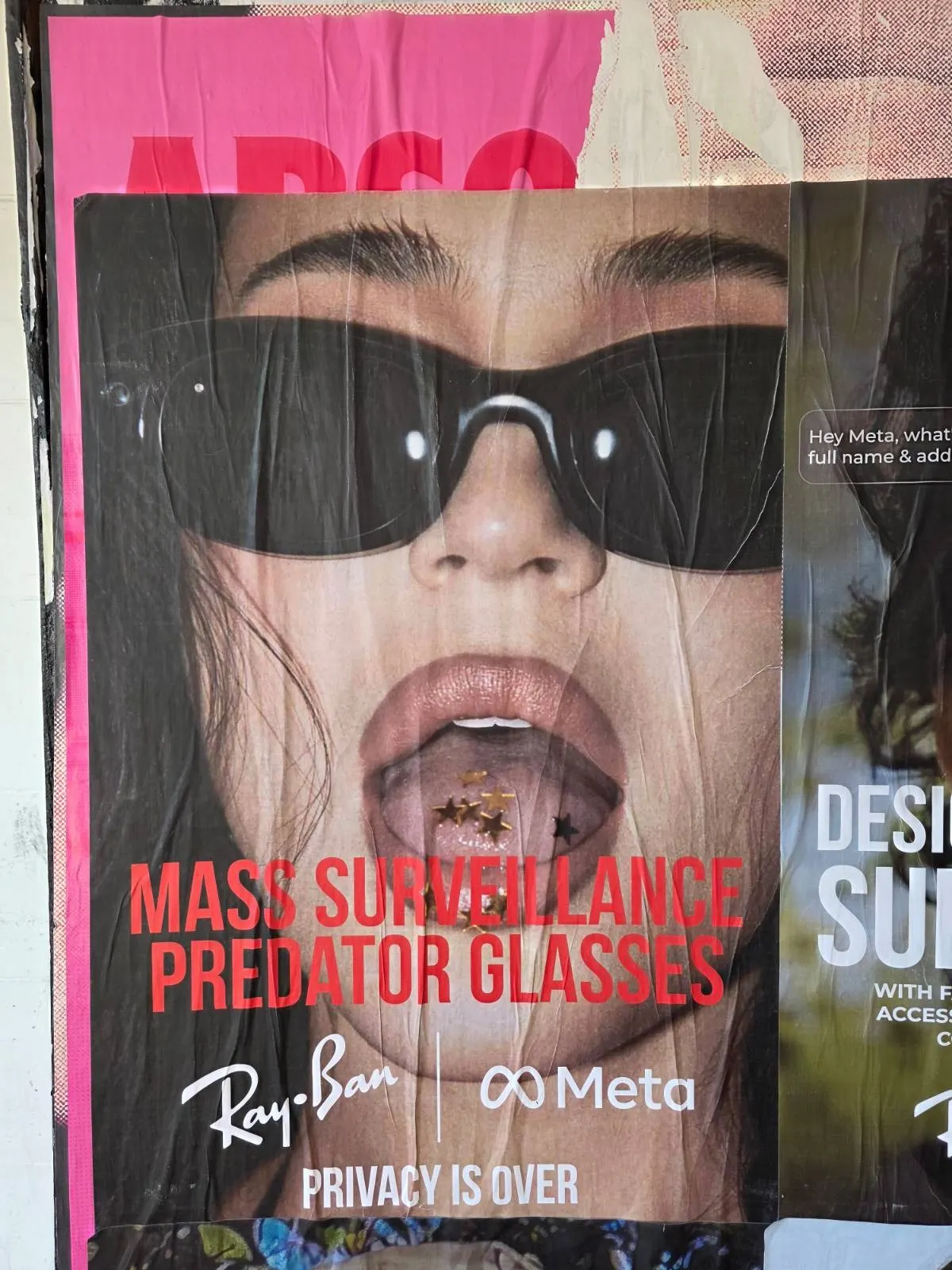
Face-cameras aren’t new, and neither is the discomfort. More than a decade ago, we called Google Glass wearers “glassholes” for filming people without asking. The posters aren’t really objecting to the camera – they’re objecting to the motivation behind it. The dark commentary behind “Hey Meta, what’s her full name and address?” is about more than just being filmed without consent. It’s about an imbalance of power. The invocation to AI adds another layer: being identified, looked up, profiled by an AI, without ever being asked. The camera is the entry point to the system that carries out the real harm.

Glasses like these are part of the race to turn lived reality into training data. Elon Musk has said that Tesla’s self-driving models learn from video that “came from the cars” themselves, millions of vehicles turning the streets they drive through into a working model of the world. A fashionable pair of glasses is that same impulse brought down to eye level, pointed at other people, in public. It’s one node in a much larger AI build-out that watches, from the cameras on cars to the sensors going up in cities, but it’s one being sold to you, with a famous face, as something you’d want to wear.
Which is what makes the Kylie Jenner campaign such a strange bet. Meta hired one of the most famous women in the world to put a glamorous face on a product built to record people without their knowledge, and aimed that pitch at women, the people who best understand what being recorded without consent actually costs. It is, arguably, the same move as OpenAI’s farmhouse retreat with influencers: beloved faces enlisted to soften a product people can already see clearly. It didn’t work. You can dress up a product that strips people of consent, but you can’t make it feel fair, and unfairness is what people react to.
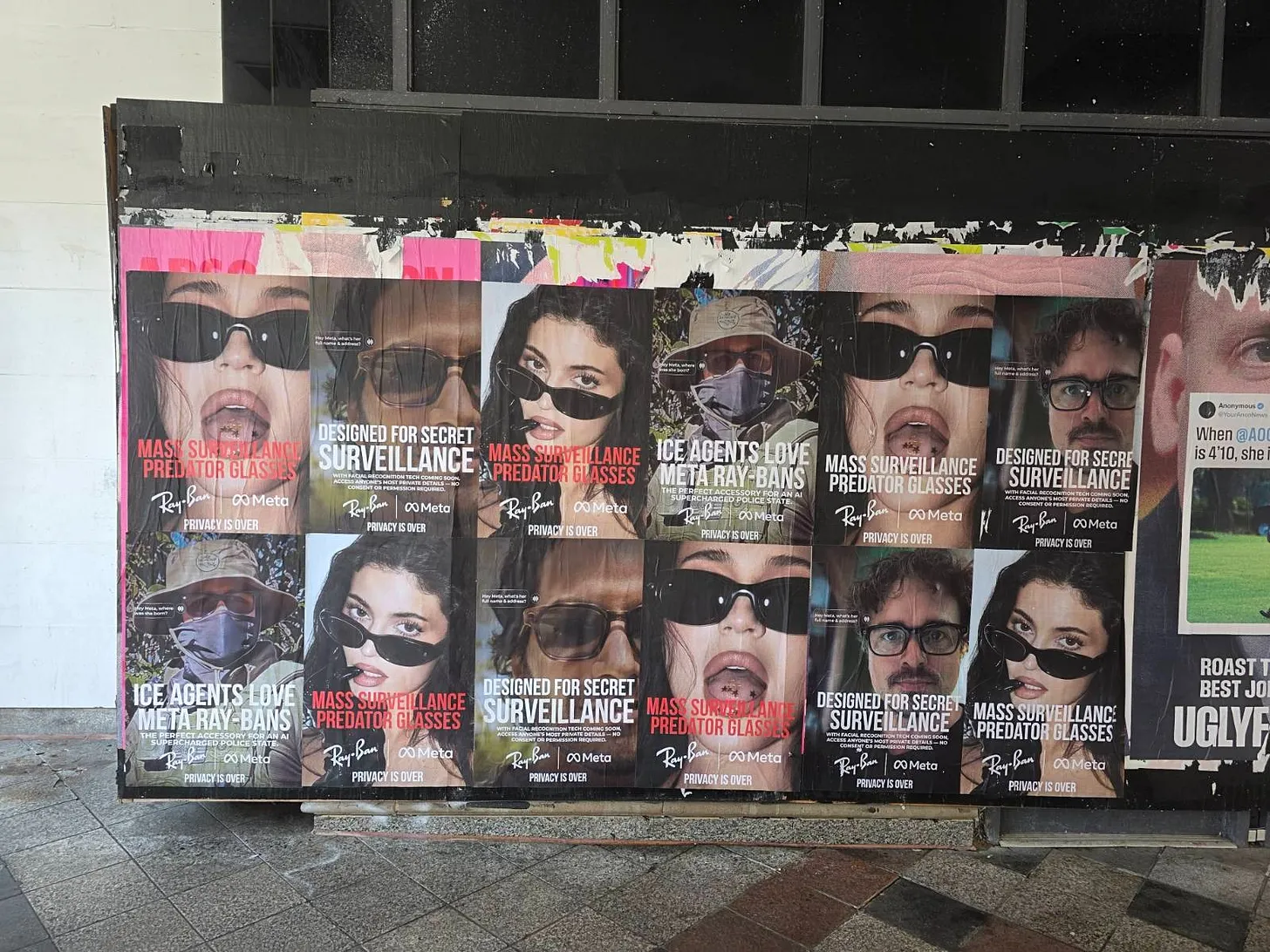
Underneath it all, the posters, the venue bans, the pile-on in the comments, is one simple objection: nobody asked us. Not before pointing a camera at us, not before feeding our faces into something that can name us, not before deciding this was the future we’d be living in. People are tired of being handed AI as the done deal.
The feeling of rejection is real, and yet, this isn’t simply reflexive technophobia. You can want what AI promises and still refuse to be the thing it watches. The reaction to this product launch shows us that the public is waking up to a feeling: AI shouldn’t be something that happens to you.