The Wrong Messenger
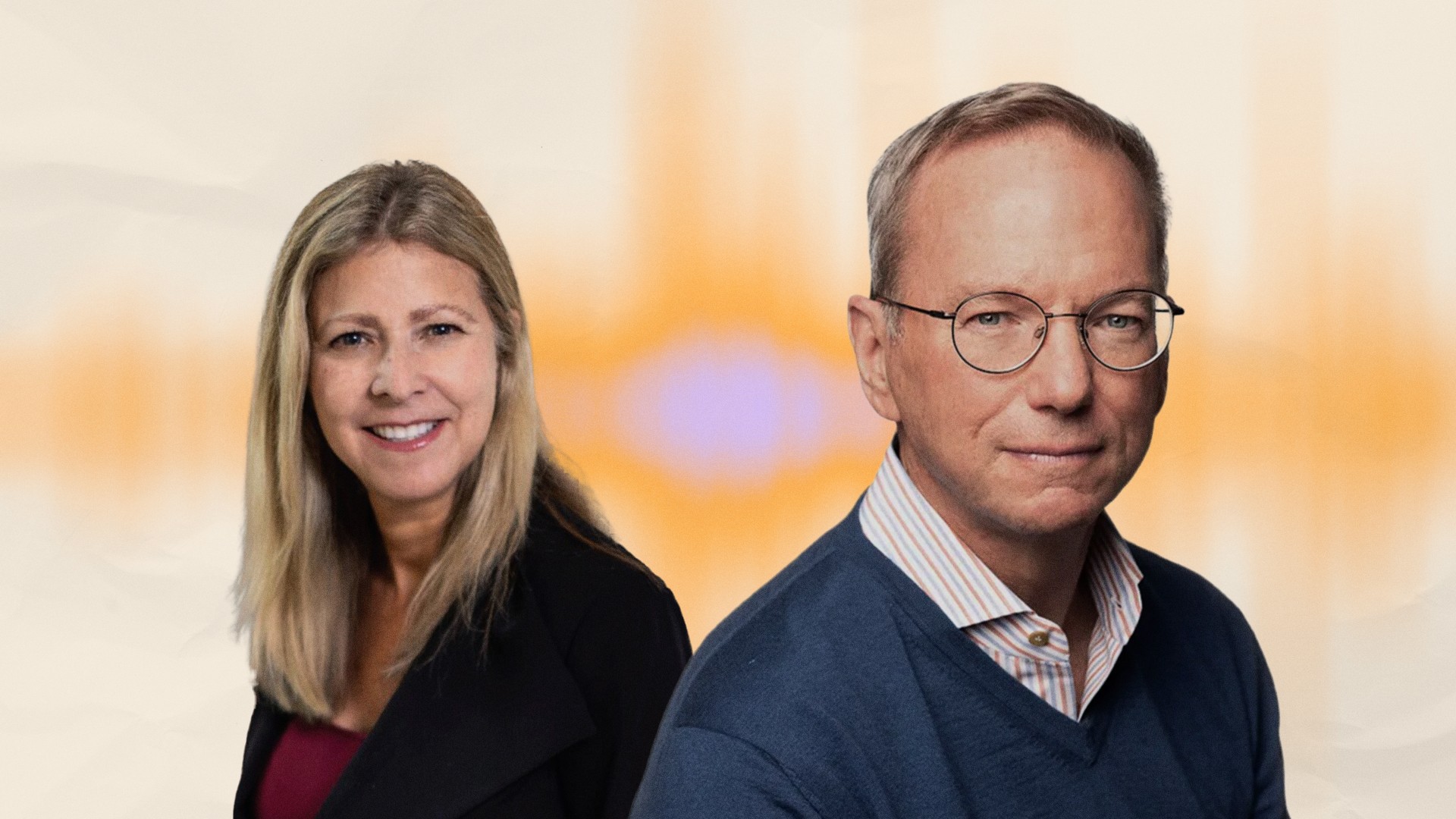
On May 15, 2026, Eric Schmidt walked onto a stage at the University of Arizona to deliver the commencement address. He is seventy-one, the former CEO of Google, and worth around sixty-two billion dollars.
He started with his own student years and the rise of the personal computer. Then, he mentioned that Time magazine had named the architects of artificial intelligence its 2025 Person of the Year.
That was when the boos started.
Schmidt hadn't made a single argument about AI yet. He hadn't told the graduates that the technology was coming for their jobs. He hadn't asked them to embrace it. He hadn't even gotten to the rocket ship line that would later go viral, the one about how "when someone offers you a seat on the rocket ship, you do not ask which seat. You just get on." He had just called the people who built the technology architects, and the room rejected it.
He kept going. He named the fear. He told the graduates it was rational, that social media has made it worse, that the algorithms had learned to monetize their anxiety. Then he made the argument that, on its substance, was almost word-for-word what Seismic and other AI policy organizations argue every week. "To speak of the future as though it has already been decided is to surrender the one thing that actually matters. You are surrendering your agency. The future does not simply arrive. It gets built."
The booing did not stop.
A week earlier, at the University of Central Florida, the real estate executive Gloria Caulfield had been booed in almost the same way after she called AI “the next industrial revolution.” At Middle Tennessee State University, Big Machine Records' Scott Borchetta got the same treatment after telling graduates that AI is rewriting his industry “as we sit here.” When the booing started, he responded with “deal with it.” The class of 2026 had spent the spring booing tech executives off graduation stages across the country.
The press has covered the season as a return of Luddism. It is not. The Luddites were skilled textile workers in the early 1800s who understood the machines they were destroying better than the men who had installed them. What the press has been calling Luddism is something more specific, and the moment the booing actually started in Arizona is evidence of what it is.
The message was not the problem. It was the messenger.
Schmidt's message was positive. AI is coming, and it will touch every part of life. The fear is rational, and social media has made it worse. But we need to face this, lean into it, engage, because the future is not written. We must build it ourselves, not let it happen to us. We must refuse to surrender our agency. We make this case. Every serious AI governance organization working today makes some version of it every week. And Schmidt made it on a stage in Arizona, in front of about ten thousand graduating students, and they booed him through it.
There’s a clue as to why. Schmidt's net worth is around sixty-two billion dollars. The average projected lifetime earnings of an American college graduate are roughly $2.8 million. If every member of that graduating class works their full career at the national average, they will collectively accumulate less than half of what Schmidt personally controls today. He was telling ten thousand graduates not to surrender their agency in a system that has already decided most of them will spend their lives working for people like him. The future they were being asked to help build is one he has spent the last twenty years building without them.
Gloria Caulfield's speech the week before is the clearest evidence that this is the actual dynamic. Caulfield is the vice president of strategic alliances at Tavistock Development Company, a real estate and development firm in Florida, and she was speaking to graduates of the College of Arts and Humanities and the Nicholson School of Communication and Media. She called AI “the next industrial revolution,” and the room booed her. She paused, visibly confused, and said, “What happened?” Then she tried to recover. “Only a few years ago,” she said, “AI was not a factor in our lives.” The same audience cheered her.
The first framing claimed authority over their future. The second conceded ground to them. The audience was not reacting to artificial intelligence, but to which version of Caulfield was in front of them.
Ed Bastian, the CEO of Delta Air Lines, addressed graduates at Emory on May 11. He told them he had asked AI to draft his commencement speech and didn't like the result. “It was not my personal voice,” he said. “You want to hear from me, not some algorithm of me. So, don't worry. I threw it away and took pencil to paper.” The audience applauded.
In Arizona, Schmidt was being booed for telling graduates to embrace a technology that would shape their futures. At Emory the same month, Bastian was being applauded for refusing to use that same technology on them. The substance of what Bastian said was less developed than Schmidt's. He didn't offer an analysis of where the technology was heading or make a policy argument. All he did was decline to use AI when he was supposed to be addressing the graduates personally, and that was enough.
The class of 2026 isn't rejecting AI, or even rejecting the responsible-engagement case. They are rejecting the people making it, who happen to be the same people who got rich building the thing they're now telling the graduates how to feel about.
The inevitability trick
Every booed speaker made some version of the same argument: AI is coming whether the graduating class wants it or not. Schmidt called it a technological transformation that “will be larger, faster, and more consequential than what came before.” Caulfield called it the next industrial revolution. Borchetta said it was rewriting his industry “as we sit here.” The technology gets described as a weather system, a tide, a force the audience can either get on board with or be flattened by. The rocket ship is already leaving. The only question is whether you get a seat.
The press treats this framing as common sense. It is not. It has a two-hundred-year history of being useful to a specific set of people. The reason the word “Luddite” became a synonym for technophobe is that doing so was useful to the people the original Luddites opposed. If those textile workers were objecting to a specific distributional choice, there was a political conversation to be had about that choice, and other choices were possible. If they were objecting to progress itself, there was no conversation. The framing has held for two centuries because it has been continuously useful. Every wave of industrial transformation since has produced workers raising the same distributional question, and every wave has been answered with the same accusation. You cannot stop progress. You are on the wrong side of history. Get on the rocket ship.
In 1812, in the textile mills of Yorkshire and Nottinghamshire, the original Luddites were skilled textile workers, the highest-paid in the industry, who understood the new machinery better than the factory owners installing it. What they objected to was a specific decision by specific owners to use that machinery in a specific way that reduced their wages, degraded the cloth, and concentrated profits in fewer hands. They attacked William Cartwright's mill in April of that year; two were shot dead in the assault, and fourteen more men were hanged at York the following January. The Luddite question, as E.P. Thompson and Brian Merchant have argued, was never about whether the machines worked. It was about who had decided that their trade should be broken, and who was going to pocket the difference.
AI is the current iteration. The graduates being told that it will "touch every profession, every classroom, every hospital, every laboratory, every person, and every relationship" are not being told a fact about AI. They are being told a fact about how the companies building it have chosen to deploy it. AI doesn't have to touch every relationship. It has been built to. The deployment looks the way it does because of decisions made by a specific group of people with specific incentives. The framing of those decisions as inevitable is a choice too, and it is the choice the piece is interested in. None of this is technically inevitable. It is being presented that way because the people making the decisions would rather not have to defend them. The framing does the defending for them.
When Schmidt told the graduates, “the future does not simply arrive, it gets built,” he was technically correct. The mistake, the thing that earned him the continued booing, was the implication that the graduates would build it. The building has already been going on for a decade, in laboratories they do not have access to, in computers they cannot afford, with capital they will never see, by people whose net worths exceed their collective lifetime earnings by orders of magnitude. The trajectory has been chosen; they are being asked to ratify it.
Schmidt told the graduates to take their agency seriously, to refuse the idea that the future has been written for them. The class of 2026 is doing exactly that. They are refusing to ratify a trajectory that has been built without them and is being handed to them as a natural law. They will accept Schmidt's invitation and take a seat on the rocket ship. But not as cargo. Their seat will be on the command bridge. And the price of entry is the Luddite question: who has decided this should happen this way, and who is going to pocket the difference?
The data catches up to the boos
The class of 2026 caught the shift first, but they are not alone in it. A New York Times poll released in May found that 47% of voters under thirty rate AI as “mostly bad,” the highest of any age bracket. A Gallup poll found that 18% of Gen Z report feeling hopeful about the technology. The Alliance for Secure AI counted roughly 120,000 AI-linked job losses in the United States in the past year. A Stanford study found that Americans have the least confidence in their leaders’ ability to regulate AI among the populations surveyed.
The data center fight is where the same pattern appears across the rest of the country. A Gallup poll this spring found that 71% of Americans oppose data centers being built in their communities, with Democrats, independents, and Republicans converging at rates almost nothing else can produce in 2026. Americans now report being more comfortable living next to a nuclear power plant than next to an AI server farm.
Rachel Bitecofer has called this the closest contemporary parallel. What is happening to AI is what happened to manufacturing during the China Shock: the same logic of being told to absorb a disruption that was designed for someone else's benefit. The students caught it earlier because they are most exposed to it. They have used these tools every day of their college lives. The fear comes from how well they know them, not from how little, and from being told the only acceptable response is to get on the rocket ship.
The boos at the commencement ceremonies are the loudest version so far of something that is already happening across the country. The rest of the country is on the same trajectory.
The class of 2026 is the first full graduating class of the AI era. The graduates booing Schmidt in Arizona were not refusing to engage with the future. They were refusing to accept that people who built this one get to define how the rest of them feel about it. That is not a policy problem. It is a framing problem, a positioning problem, and a question of who gets the authority to describe what is happening.
This is the conversation Seismic exists to shape. The boos in Arizona are political information about a fight that is going to be won or lost in language, in messengers, and in frames that get picked up before the wrong ones harden. The case for engaging with AI is real, and the work is to ensure it can be carried out by the people who can carry it credibly, in the language that lets it land, before the country settles on a version that nobody can pull back from.
The boos are not noise. They are the first line of a question the country is going to spend the next decade trying to answer.